
Am I A Hypocrite? Or Why I'm Fine With Anthropomorphising Spacecraft & Rovers
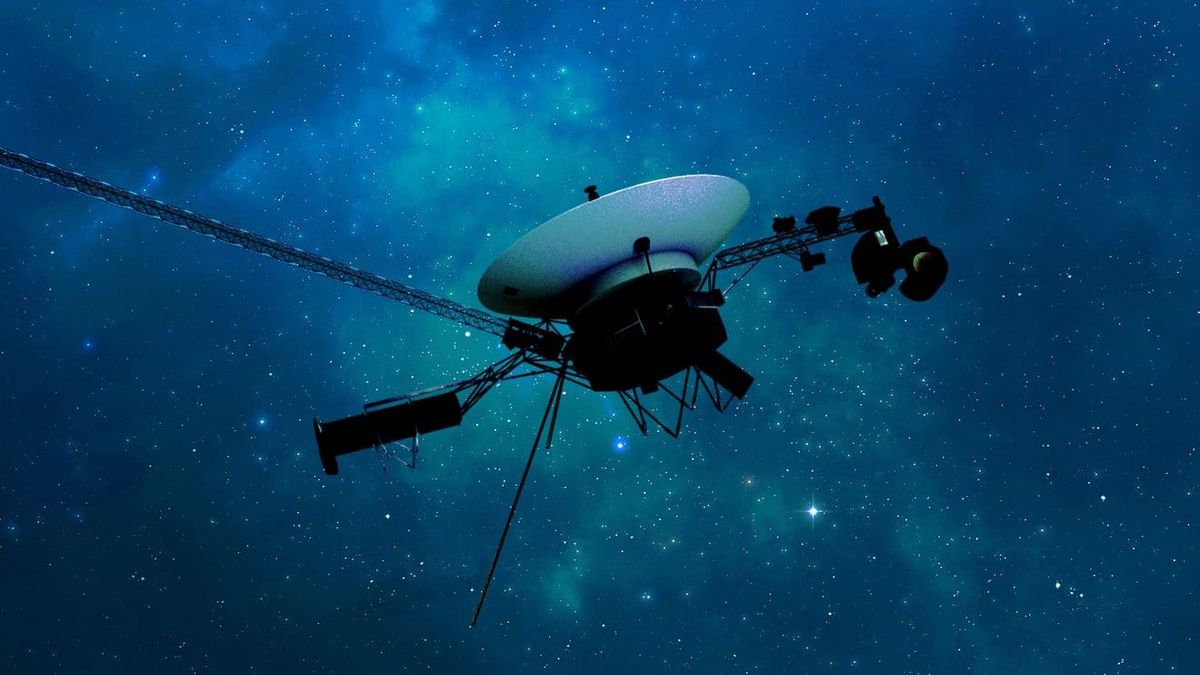
As I write these words, I have just had confirmation from NASA that Voyager 1 will be 1 light-day from Earth on November 18 (already the International Day of LGBTQIA+ people in STEM—making it a very busy day for me!).
I do love Voyager 1 and Voyager 2, the most distant human-made objects from Earth, already traveling into interstellar space and still just a tiny fraction of cosmic distances. They have travelled for almost 50 years, and one of them is now at 1 light-day away. Proxima Centauri, the closest star to the Sun, is 1,550 light-days away (4.2-something light-years). The universe is truly enormous, bigger than we can instinctively grasp.
As I have been sharing the news of Voyager 1, I had a lot of comments, both public and private, that truly show just how much we anthropomorphize spacecraft and rovers. I am not just a bit guilty of that. I have written enough obituaries about rovers, landers, and spacecraft to be plenty guilty. So the question is, how much of a hypocrite am I?
The Bad Of Anthropomorphism
There have always been negative aspects about anthropomorphizing technology (let's not just focus on space missions for a moment). We live in a world where certain individuals would not consider marginalized groups people at all, yet those same individuals probably say please and thank you to Siri.
It is even more alarming with the current machine learning algorithms, the artificial "intelligence." Many prominent people have swallowed the Kool-Aid so well and good that they think these computer programs are conscious. They are not. That has come 100 percent from anthropomorphizing tech. These language models can "speak"; thus, they must think.
To give a quick example, Richard Dawkins's history of transphobia is well known, but he was happy to anthropomorphize Anthropic's Claude into Claudia, using she/her pronouns for it and declaring it conscious, with not even a hint of irony about the whole affair.
Assigning human emotions and capabilities to any piece of technology is bad. Even when we do it for fun, even with the awareness, there is an intrinsic risk in shifting how we consider any technology.
Yes, I am a hypocrite
I am perfectly aware that I have written that even with awareness there is a risk for how we think and relate to technology. Will that stop me thinking of the cute little robots on Mars as little autonomous explorers? No, I do not think so.
It is definitely hubris: "Oh, I know it's bad, but I am aware of how bad it can be, and I won't be affected at all because I know how bad it can be. Others might, but not me. I will always be able to be aware of what it is—a game."
It boils down to why we do it, why we anthropomorphize the robotic explorers. For me the answer is simple: they are our extension into the cosmos. They are us, going forth into space.
Their successes are our successes; their struggles are our struggles. The PR machine of space agencies helps for sure. Cassini's final daring orbits around Saturn, ahead of the swan dive into the planet, were called the Grand Finale. And it was grand! I made lunch for a friend, and we watched as the signal was finally lost.
Mars rovers Opportunity & Spirit were supposed to work for three months but kept going. Opportunity's widely reported final message, "My battery is low and it’s getting dark," is actually a paraphrasing of telemetry messages that informed the mission team of the rover's condition. They are not the real poetic last words of a dying robot. Why have they become so popular, and why do they still make me emotional in full knowledge that they were not transmitted by the rover? Because I and many others have projected so much on a rover that kept on going for over 15 years.
And now we get to Voyager. Launched in August 1977, almost 50 years in space. They've seen some stuff no other mission has seen (Voyager 2 is the only probe to have visited Uranus and Neptune), and now they're where no human object has gone before. Technology that is many decades old, with a nuclear energy supply that gets lower and lower with every passing second, yet they persevere far beyond Neptune.
It is a story, and humans live on stories. It has its ups and its downs, like when we thought Voyager 1 had stopped making sense. A story of human creativity and ingenuity, but we do not know of all the people that make the Voyager happen, but we know the names: Voyager 1 and Voyager 2. They are the culmination of all those incredible people's work.
So, yes, I try my best to not go too wild with the anthropomorphization in my communication work. Still, they are our little explorers that could!
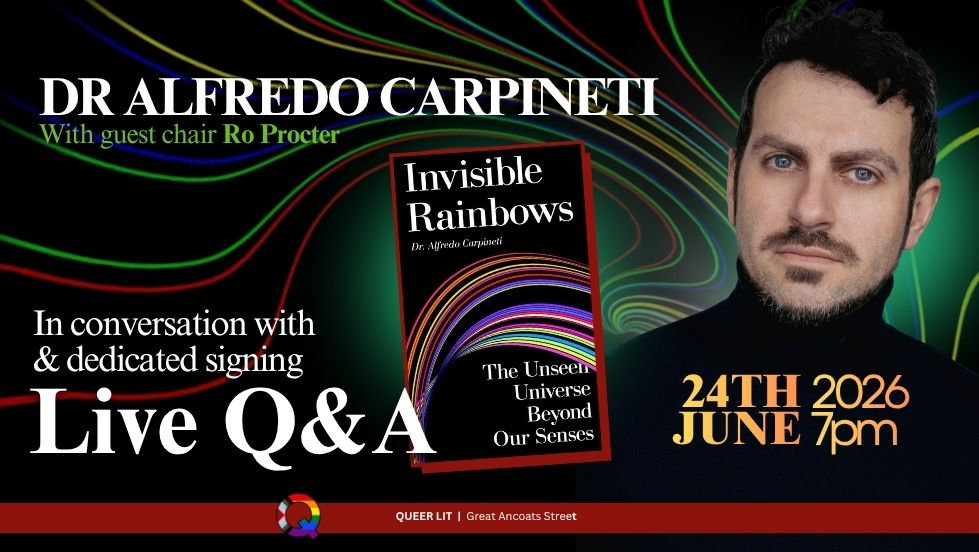
Thank you so much to anyone who has bought the book! I can't tell you how grateful I am! The book tour is still ongoing, and here are a few dates for your calendar.
June 24 in Manchester:

July 6 in London at The Royal Institution (and you can touch a meteorite):

July 22 in Birmingham:


And many more links coming soon!