Catch A Supernova Before It Fades
I had a bit of a dream come true happen this week. It also reopened an envious gripe that I have with early modern Western astronomers (and pretty much with anyone that lived across the decades between 1572 and 1604 CE)
A Star is… dead!
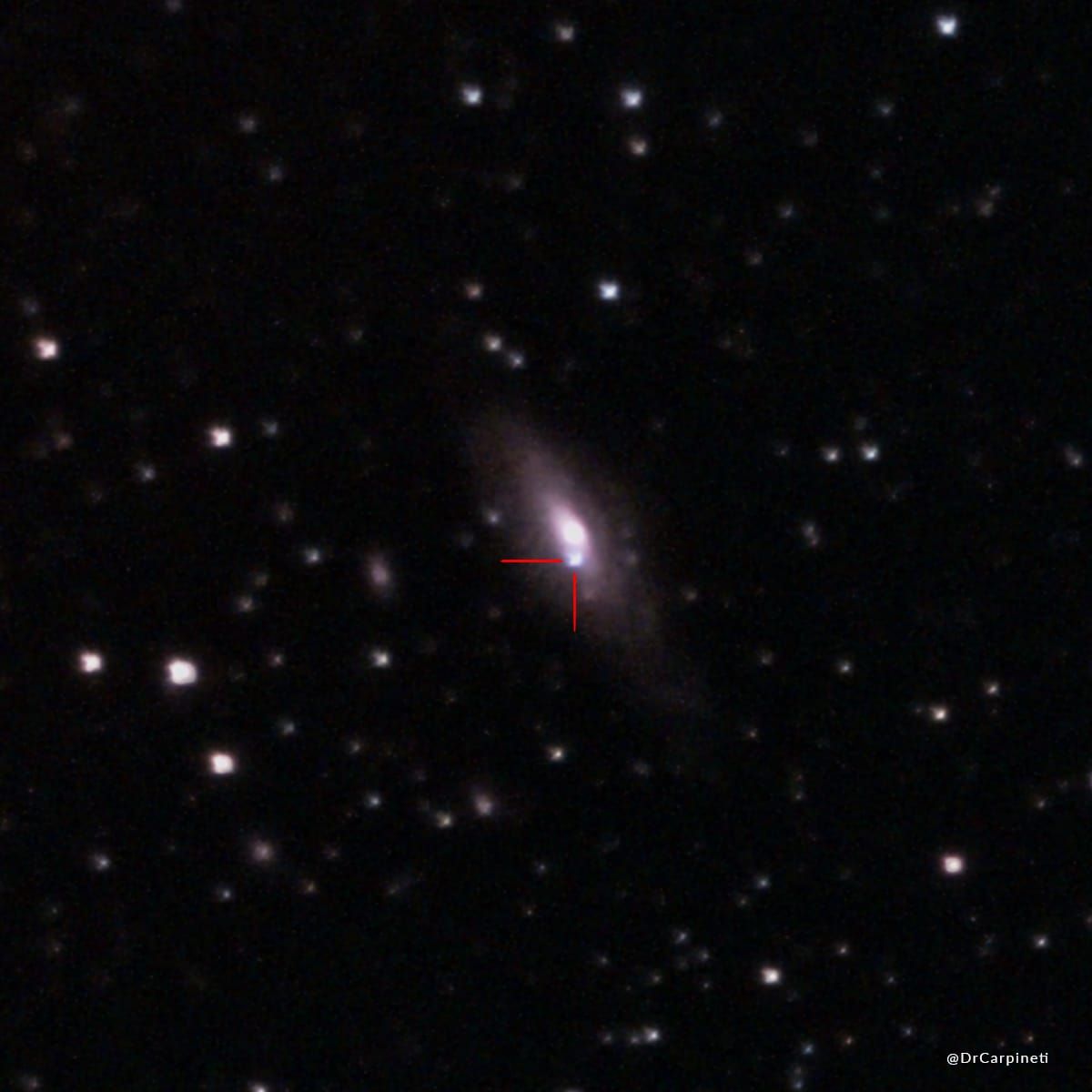
This week for the first time ever I saw a supernova live! I went up on the roof, pointed the telescope to the heavens, and after a few seconds, a bright dot appeared next to the centre of galaxy NGC 7331. This is a spiral located 45 million light-years away.
The stellar explosion was a Type Ia supernova. Many supernovae are the result of a massive star—many times the mass of the Sun at the very least—exploding at the end of its life. They run out of nuclear fuel and collapse on themselves with such energy that their core explodes.
Before you start worrying, this won't happen to our Sun. The Sun is destined to become a white dwarf. When it runs out of its nuclear fuel, the core will collapse a bit, becoming this hot small object. White dwarfs are hot and bright from the collapse but they no longer produce energy through fusion. All their heat is slowly radiated into space over trillions of years.
But this won't happen to all of them!
Type Ia, in fact, are the explosion of a white dwarf. If a white dwarf has a companion, it could steal some material from it. Eventually, it might steal enough material to have a mass large enough to collapse on itself (this is the Chandrasekhar limit or about 1.44 times the mass of the Sun).
Well-behaved stars seldomly make history. And so the thieving star explosions are extremely bright and visible. There is one per galaxy per century or so, and they are very important as standard candles (a way to measure cosmic distances) because they have roughly the same luminosity.
The supernova is called SN2026aaiv and is visible in the Northern Hemisphere and up to mid-latitude in the Southern. You'll need a small telescope to catch it, but if you have a chance, I think it's totally worth a bit of September evening chill! Find it at coordinates: 22h 38m 17s / +34° 33′ 17″ - that's about 4.4° north-northwest of the star Eta (η) Pegasi.
Alfredo is angry with dead people
So what’s my beef with people in the early modern period? Well, those dead so-and-sos were lucky enough to see not one but two supernovae with their naked eyes in a matter of decades.
There have been people alive that saw both!!
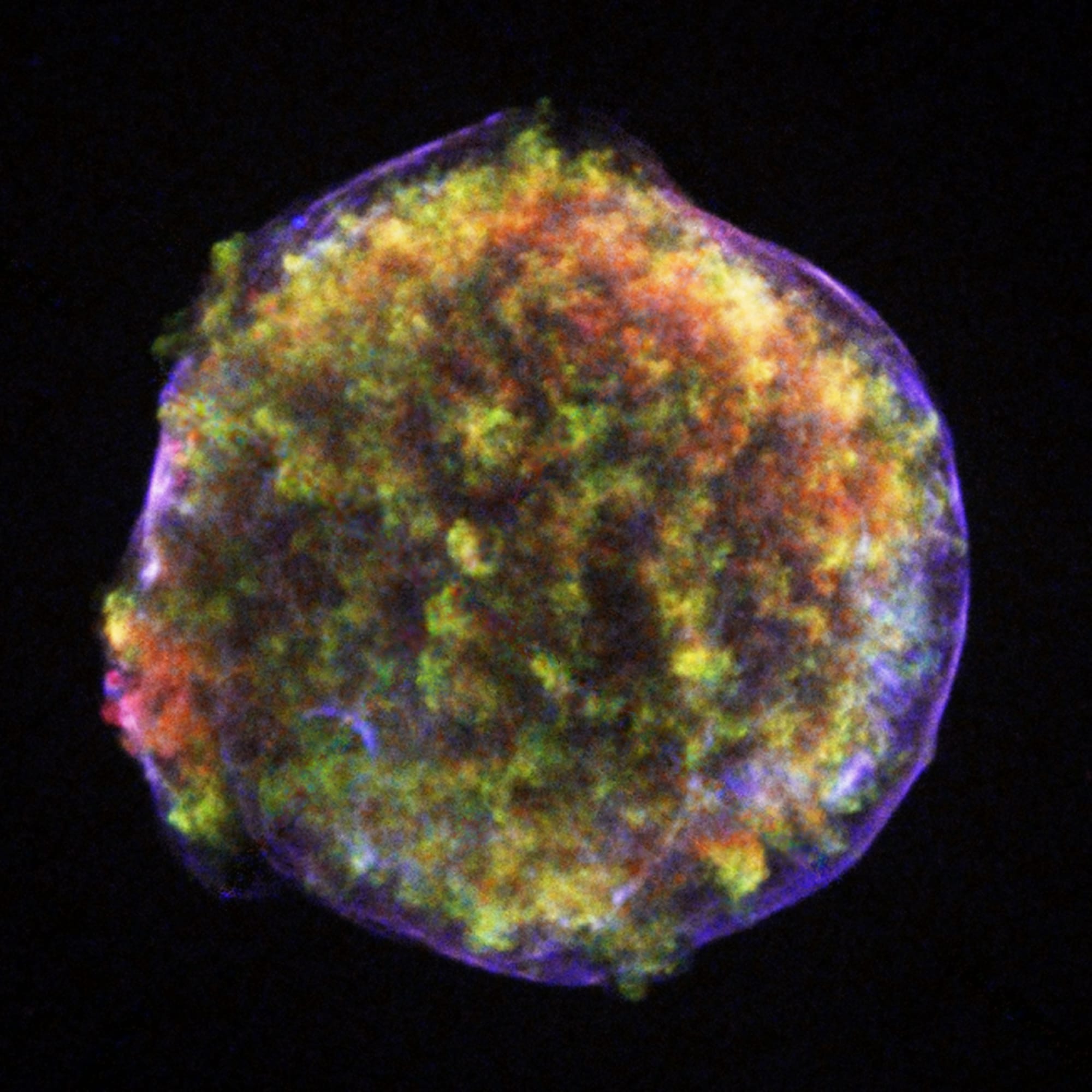
The first one is known as the Tycho's Supernova after astronomer Tycho Brahe. It happened in 1572, also Type Ia, this one in the constellation Cassiopeia. The second one in 1604, known as Kepler's Supernova, is another Type Ia supernova in the constellation Ophiuchus. Kepler's is the last known supernova that was visible to the naked eye. And both of them happened in the Milky Way.
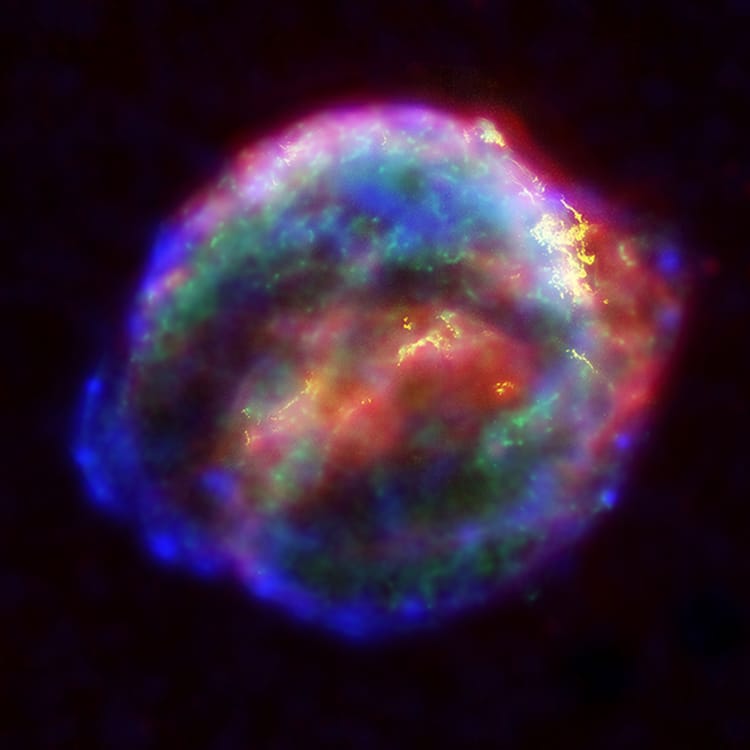
The importance of these two events in modern astronomy is undeniable, proving that the heavens were not immutable.
I am not saying that they shouldn't have happened to them. I am saying that I deserve a supernova too, one so bright that I can see it during the day, like Tycho's.
Some dead people have all the luck!
If you want to hear more from me, I was recently interviewed by the fantastic Dr Moiya McTier about Invisible Rainbows (which is out in the States tomorrow)!!


And as always, here is a link to get the book:
 Wilton Square