Astronomy
Astroholic Vlog: Dyson Spheres
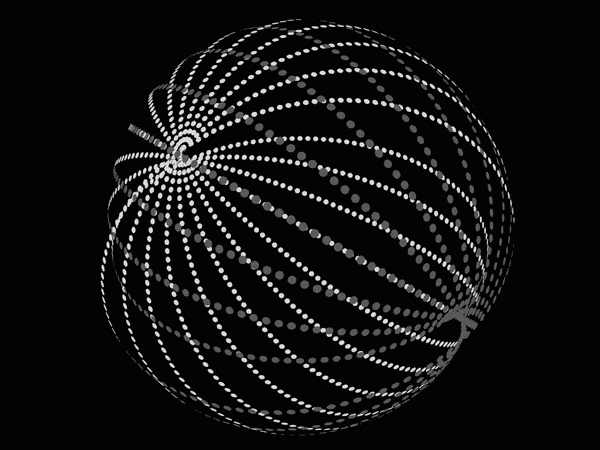
In this Astroholic Vlog I will be talking about Dyson Spheres. Dyson Spheres are hypothetical megastructures purposely built around stars to absorb most or all of the stellar electromagnetic output.

Astronomy
In this Astroholic Vlog I will be talking about Dyson Spheres. Dyson Spheres are hypothetical megastructures purposely built around stars to absorb most or all of the stellar electromagnetic output.
Electromagnetic Radiation
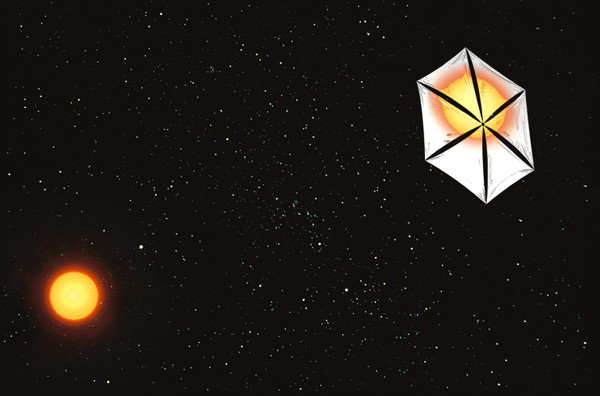
My friend Russell asked me under which condition an object would be able to stand still around the Sun. This is a very interesting question; it probes some fundamental facts about the solar system and its applications are keeping many engineers around the world busy. Planets go around the Sun due...

Cosmology
Saoussen Mbarek and Manu Paranjape at the Université de Montréal in Canada have published a paper that details the conditions for negative mass to exist in our Universe without the need to include exotic particles. In their calculations negative mass is allowed in the General Relativity solution ...
Curiosity
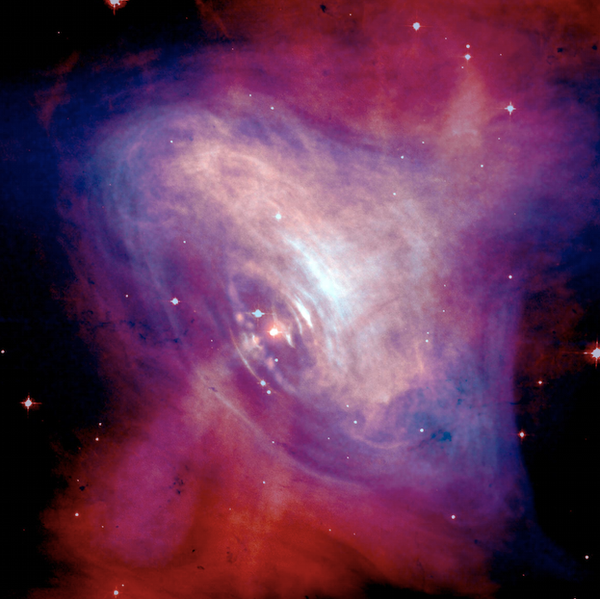
What would a planet orbiting a pulsar look like from the ground? Would it look like a giant disco planet with a constant strobe light? Pulsar form from supernova explosions, and they are neutron stars that spin on their axis thousand time per second.

Galaxy Merger
Galaxy mergers are violent interactions between galaxies and they are consider one of the fundamental steps in how galaxies form and evolve. Mergers occur when two (or more) galaxies collide. This interaction can radically alter the overall structure of the progenitors due to the tidal forces bet...
AstroNews
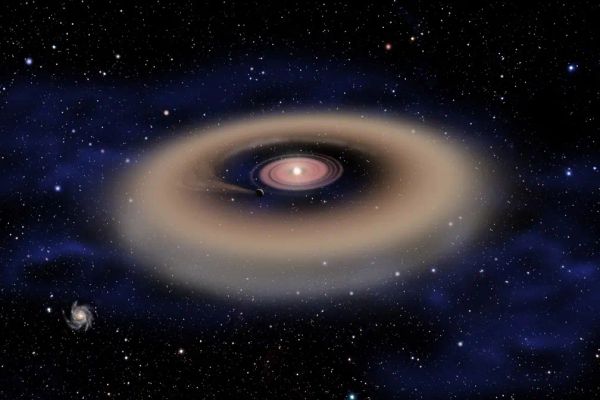
The exoplanet finder extraordinaire that is the Kepler telescope significantly changed our understanding of the type of planets that can exist in our galaxy. We only find two types of planets in our solar system: small rocky planets (like the Earth) and giant gassy planets (like Uranus). The scie...
AstroNews
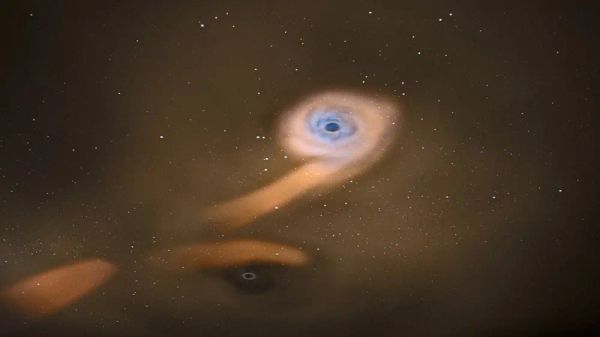
When galaxies collide, the supermassive black holes (SMBH) at their centre merge after a long spiralling dance around each other. Several studies have been conducted to underpin everything that happens from the beginning of the galaxy mergers to the SMBHs becoming one; the final details of this p...
AstroNews
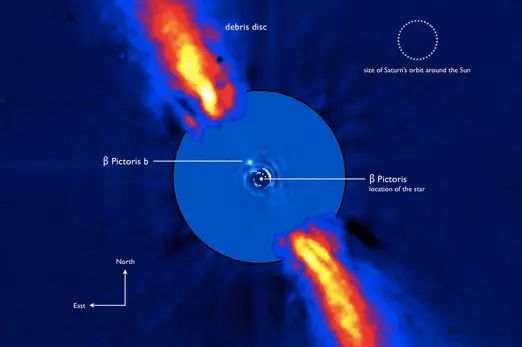
Dutch Astronomers using ESO’s Very Large Telescope were able to measure the rotational speed of a planet outside the Solar System for the first time. Ignas Snellen and his colleagues at Leiden University in the Netherlands used infrared light and its absorption in the planet atmosphere to calcula...
AstroNews
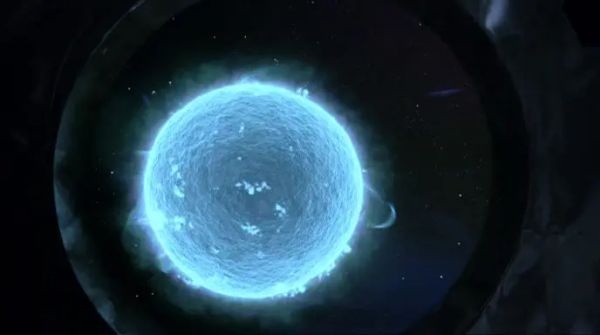
Associate Professor Kevin Luhman of Penn State University has discovered the coldest brown dwarf yet using the NASA’s Wide-field Infrared Survey Explorer. A brown dwarf is a massive gaseous object which is on the low end of the stellar mass and temperature scale. There’s an heated (pardon the pun...

AstroNews
The NASA’s Kepler Space Telescope team have discovered the first Earth-size planet orbiting a star in the “habitable zone”. The habitable zone, also known as the “Goldilock zone”, is the area around a start where planets (or satellite) are in the right range of temperature to posses liquid water ...
AstroNews
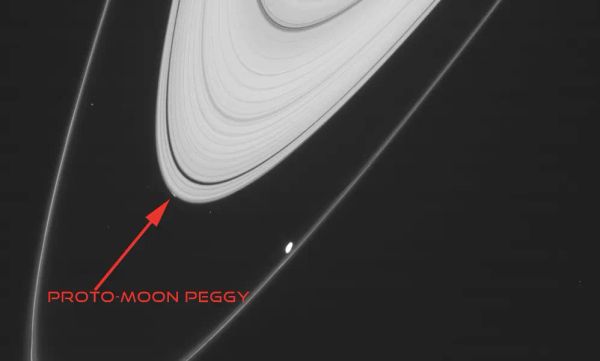
Exactly one year ago, astronomer Carl Murray a scientist from Queen Mary University of London discovered a curious disturbance in the A ring of Saturn. Analysing the data of the Cassini probe which was keeping an eye on the moon Prometheus (the bright white dot in the picture), Murray noticed tha...
AstroNews
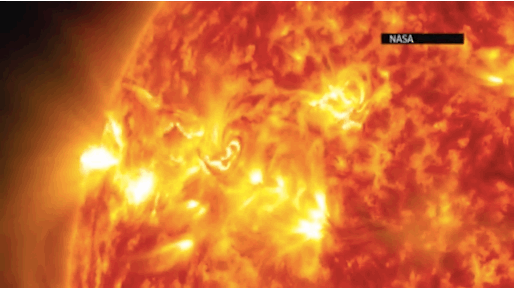
The Associate Press has released a video from NASA’s Solar Dynamics Observatory of a flare erupting from the Sun. Solar Flares are sudden brightening of the Sun’s surface. They occur when the strong magnetic field of the Sun (in a yet poorly understood mechanism) accelerates charged particles to ...