Astronomy
Astroholic Vlog: Dyson Spheres
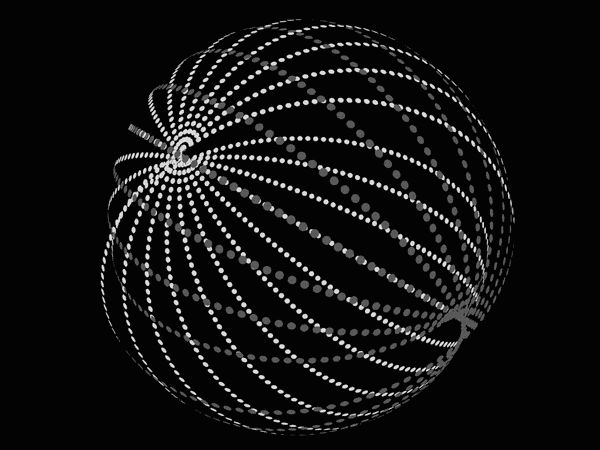
In this Astroholic Vlog I will be talking about Dyson Spheres. Dyson Spheres are hypothetical megastructures purposely built around stars to absorb most or all of the stellar electromagnetic output.

Astronomy
Astronomy
In this Astroholic Vlog I will be talking about Dyson Spheres. Dyson Spheres are hypothetical megastructures purposely built around stars to absorb most or all of the stellar electromagnetic output.
AstroNews
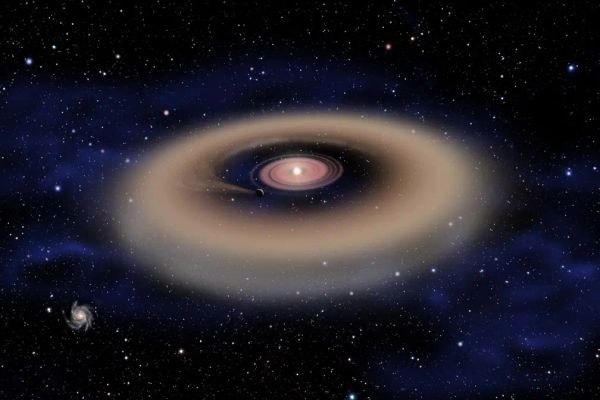
The exoplanet finder extraordinaire that is the Kepler telescope significantly changed our understanding of the type of planets that can exist in our galaxy. We only find two types of planets in our solar system: small rocky planets (like the Earth) and giant gassy planets (like Uranus). The scie...
AstroNews
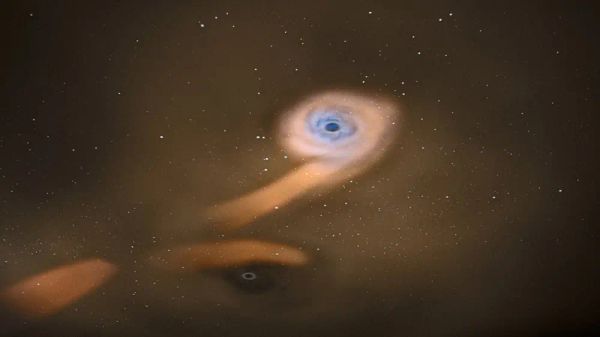
When galaxies collide, the supermassive black holes (SMBH) at their centre merge after a long spiralling dance around each other. Several studies have been conducted to underpin everything that happens from the beginning of the galaxy mergers to the SMBHs becoming one; the final details of this p...
AstroNews
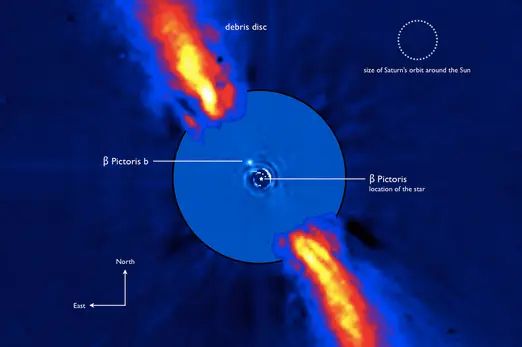
Dutch Astronomers using ESO’s Very Large Telescope were able to measure the rotational speed of a planet outside the Solar System for the first time. Ignas Snellen and his colleagues at Leiden University in the Netherlands used infrared light and its absorption in the planet atmosphere to calcula...
AstroNews
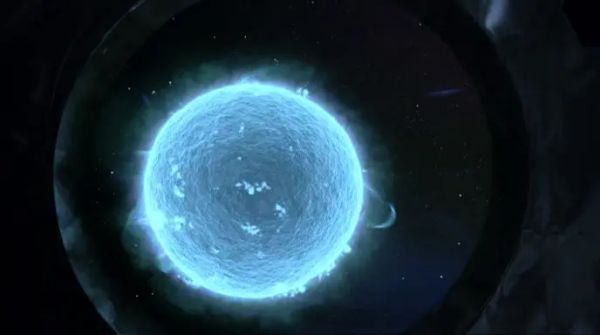
Associate Professor Kevin Luhman of Penn State University has discovered the coldest brown dwarf yet using the NASA’s Wide-field Infrared Survey Explorer. A brown dwarf is a massive gaseous object which is on the low end of the stellar mass and temperature scale. There’s an heated (pardon the pun...
AstroNews
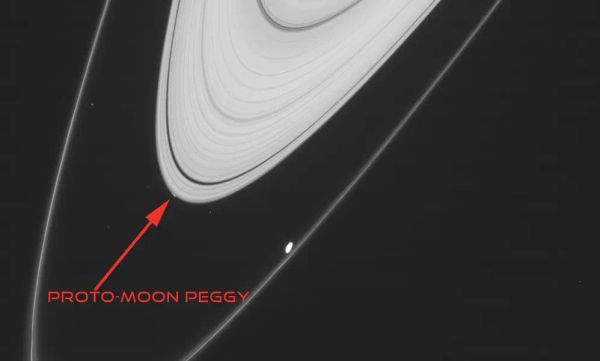
Exactly one year ago, astronomer Carl Murray a scientist from Queen Mary University of London discovered a curious disturbance in the A ring of Saturn. Analysing the data of the Cassini probe which was keeping an eye on the moon Prometheus (the bright white dot in the picture), Murray noticed tha...
AstroNews
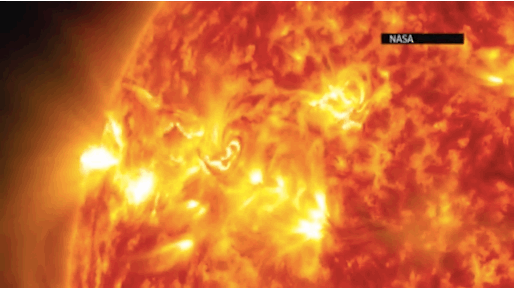
The Associate Press has released a video from NASA’s Solar Dynamics Observatory of a flare erupting from the Sun. Solar Flares are sudden brightening of the Sun’s surface. They occur when the strong magnetic field of the Sun (in a yet poorly understood mechanism) accelerates charged particles to ...
AstroNews
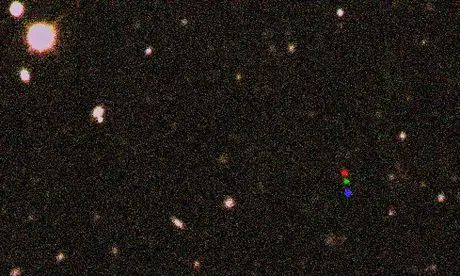
A new dwarf planet has recently been discovered in the solar system, orbiting at about 10 light hours from our Star. This is the furthest object belonging to our planetary system that we have been able to observe.
AstroNews
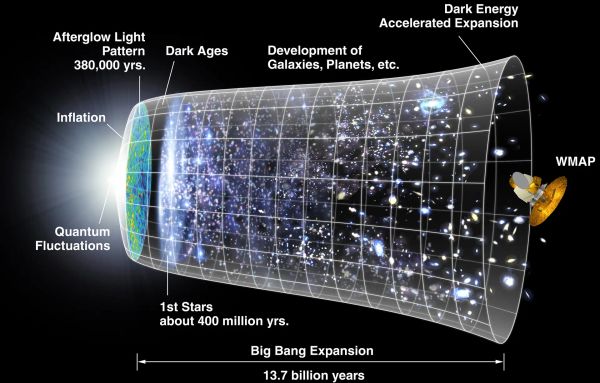
It was announced on Monday that the Background Imaging of Cosmic Extragalactic Polarisation 2 (BICEP2 – don’t you love projects acronyms?) experiment at the South Pole found a special pattern in the cosmic microwave background (CMB). The pattern they found is the B-mode polarisation signal in the...
Astronomy
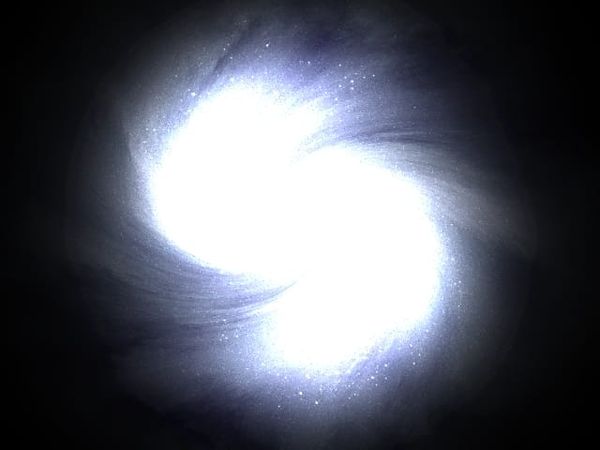
I know that likelihood of stars colliding is very low, but have there been papers describing the theoretical process of star collision? James, London I think we can divide star-collision into three classes; Stellar Mergers, Binary Collisions and Stellar Collision.
Asteroid
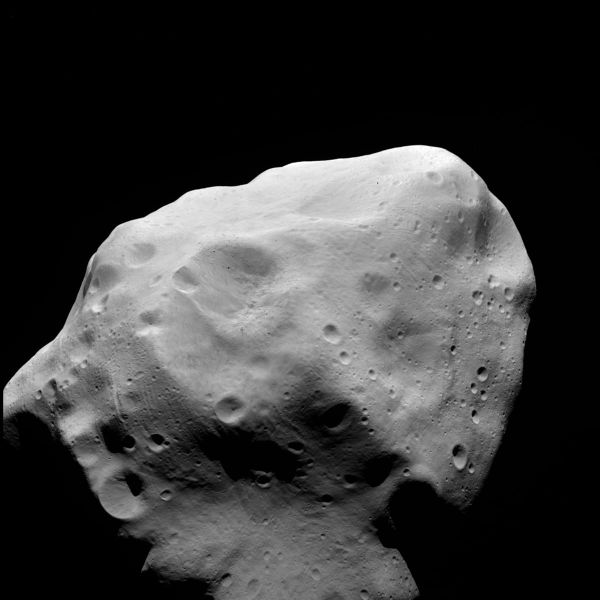
What does it actually look like in the asteroid belt? Is it anything like as dense as is shown in films? Or is it more like you can see one or two rocks in the distance? Contrary to popular belief, the asteroid belt is mostly empty.
Andromeda
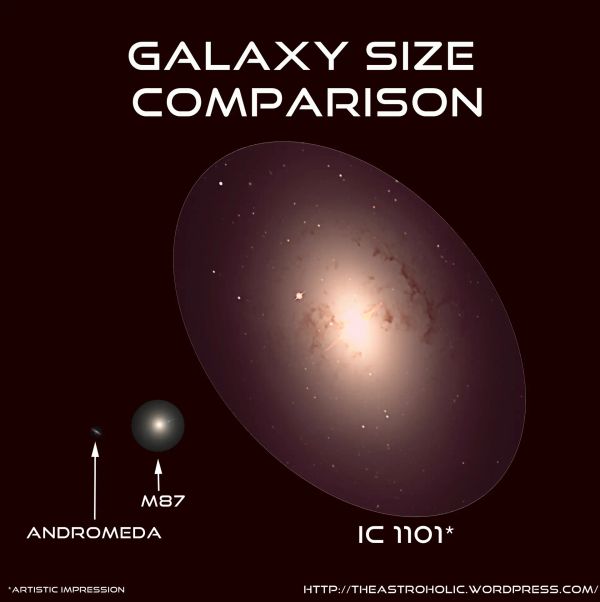
If by big we mean physical dimension, the largest known galaxy is most likely IC1101. IC1101 is gargantuan even among galaxies; it’s a super elliptical galaxy with a diffuse stellar halo that to extends to at least 1.4 million light years. The Milky Way’s halo by comparison extends to about 100.0...