
The Colours Out In Space
Would celestial things really look like that if we were in space? It depends!
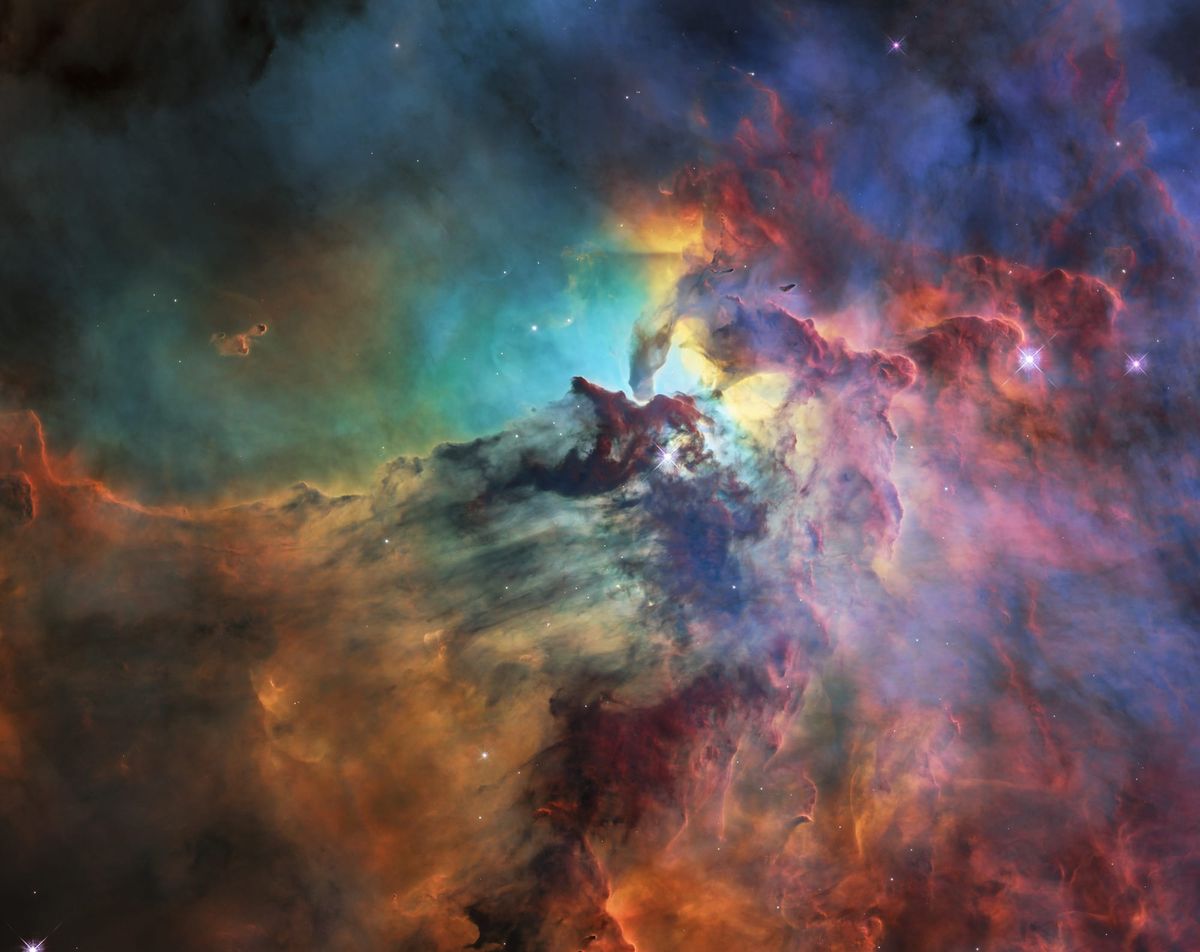
I don't know how many pictures of outer space I look at every year. I would guess over a thousand. I am sure some astronomers and astrophotographers see even more. Despite the numbers, I can't get enough of them! And yet, I have occasionally (and recently) had pushback from people because, they argued, those images are not exactly real.
Both exactly and real are doing a lot of implied work, but I thought it was an interesting thing to get into.
St. Thomas at the time of A.I.
The image I shared was actually quite basic: a panorama from NASA rover Perseverance. Someone asked me about it, and I explained that the image is a mosaic, put together by stitching together many different images. That's where I got the “not exactly real” reply. Their argument is that this is not what we would see, so not exactly real.
I think we are at a complicated time, and the expression speaks to two things. One is about how we understand technical challenges, art, and science. The other is a general concern that in a world filled with A.I. slop.
The two together make for a complicated mix. It is easy to see why someone would consider any type of image processing akin to image manipulation.
"Unless I see, I will not believe."
The labour of making space images
Turning the data collected by telescopes and spacecraft into images that we can appreciate is a serious and valuable job. Some organisations have in-house artist/engineers/scientist that do those translations. In other cases, citizen scientists get the raw data from publicly available websites and work their magic.
I interviewed one of them, Judy Schmidt, back in 2022 about her work processing space images.
“Why is it important to do this? It gives my life meaning. And I love to explore things. And this is a way of exploring without even leaving my house. You don't have to even have a car or anything. I’m exploring space,” Schmidt told me back then.
Being both an art and a science, the way these images are crafted depends on the instrument, on the data, on the goal for the image, and on the artist.
Spacecraft do not collect light, like our eyes collect light. They can collect specific wavelengths but often enough use filters, collecting specific "colours." Those colours are actually a lot more standardised than what we might consider colours.
I do find it fascinating that we both have a specific measurable way to define a colour using wavelenghts (or combination of wavelenghts) and yet, the way we actually see colours is so culturally dependent. As always, it's nature and nurture!
"I've seen things you people wouldn't believe."
With my first book, Invisible Rainbows, I looked at the colours and light that we do not see. But even images made with visible light telescopes are subjected to all those technical details and interpretations mentioned above.
Sometimes, the colours are enhanced to show differences. In others, the broad filter data is converted to a single colour to make it easier to interpret the data.
Once we add in all the light we cannot see, we need more colours. You'll see X-ray data in bright purple and radio waves in orange.
The use of the word “real” was interesting. These phenomena are real, and I do not think that I was being accused of making stuff up. I think there has always been a desire over the last couple of decades, with the advent of incredible observatories such as Hubble, to question what we would see if we were there.
 Wilton Square
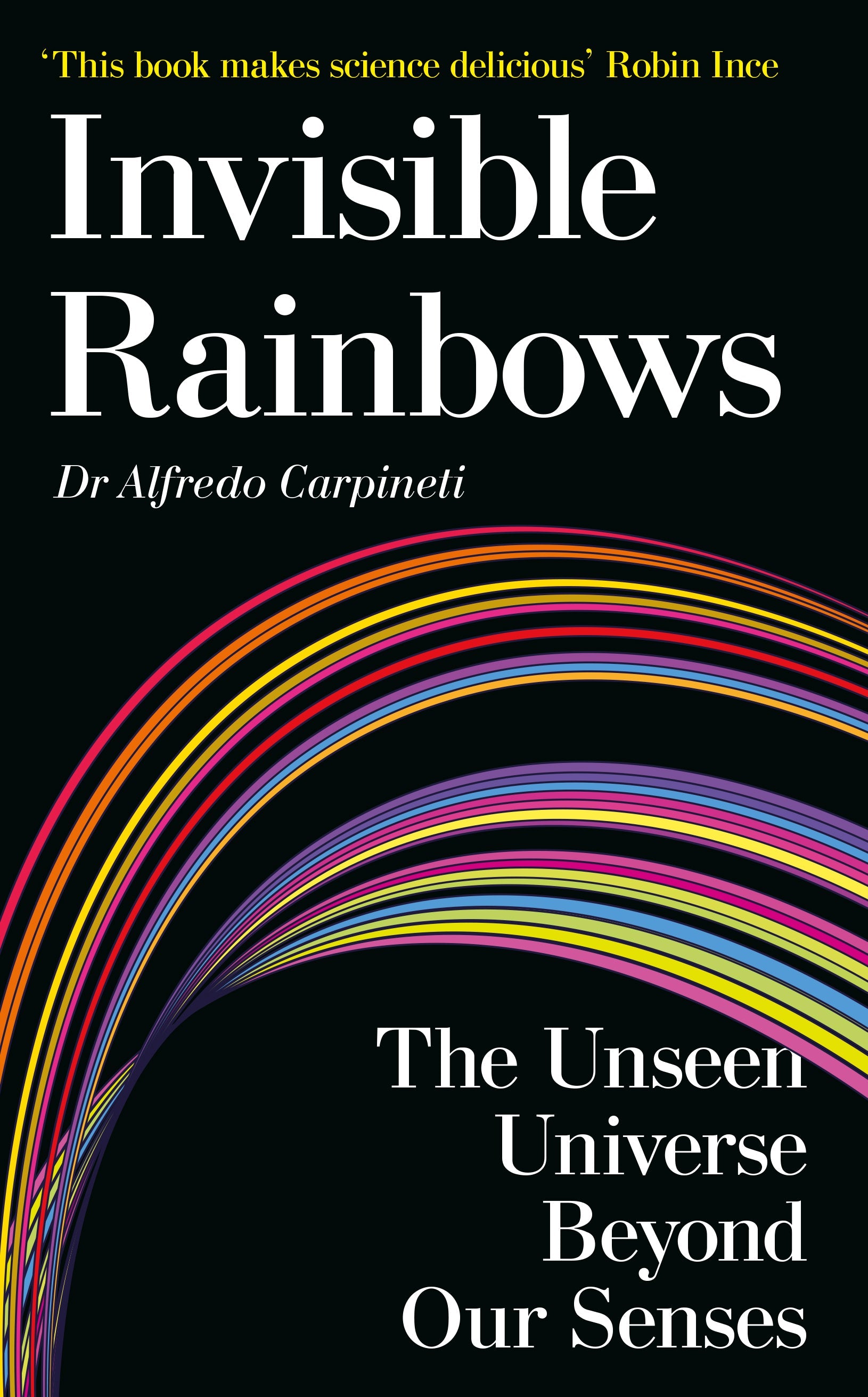
Invisible Rainbows is now out worldwide!
In a lot of cases, the colours would be muted. We might not see a dazzling galaxy unless we were much closer. Gas clouds might not look like anything at all up close (their density is so low that they only appear substantial from a distance). That does not mean that the universe would be less to our unaided eye.
Maybe quite the opposite.
Just recently, researchers tried to work out how white dwarfs would appear to our eyes. These objects are the final stage in the evolution of a star like the Sun. A dense, hot collapsed core of a former small-medium star.
White dwarfs can become "polluted" by heavier elements than hydrogen and helium, such as sodium, magnesium, calcium. This would affect their colours if we were close enough to see them. Some would be an intense blue; others would be pink, salmon, orange... and even green! We had no idea there were green stars until very recently!
So yes, there is so much more to the universe than meets the eye, and the images we take of space might not be what we would see, and yet we should not dismiss our vision when it comes to understanding the cosmos. You might just find a green star!

I will be speaking at this event on December 12