
The Scariest Thing About Dangerous Asteroids Is World's Governments
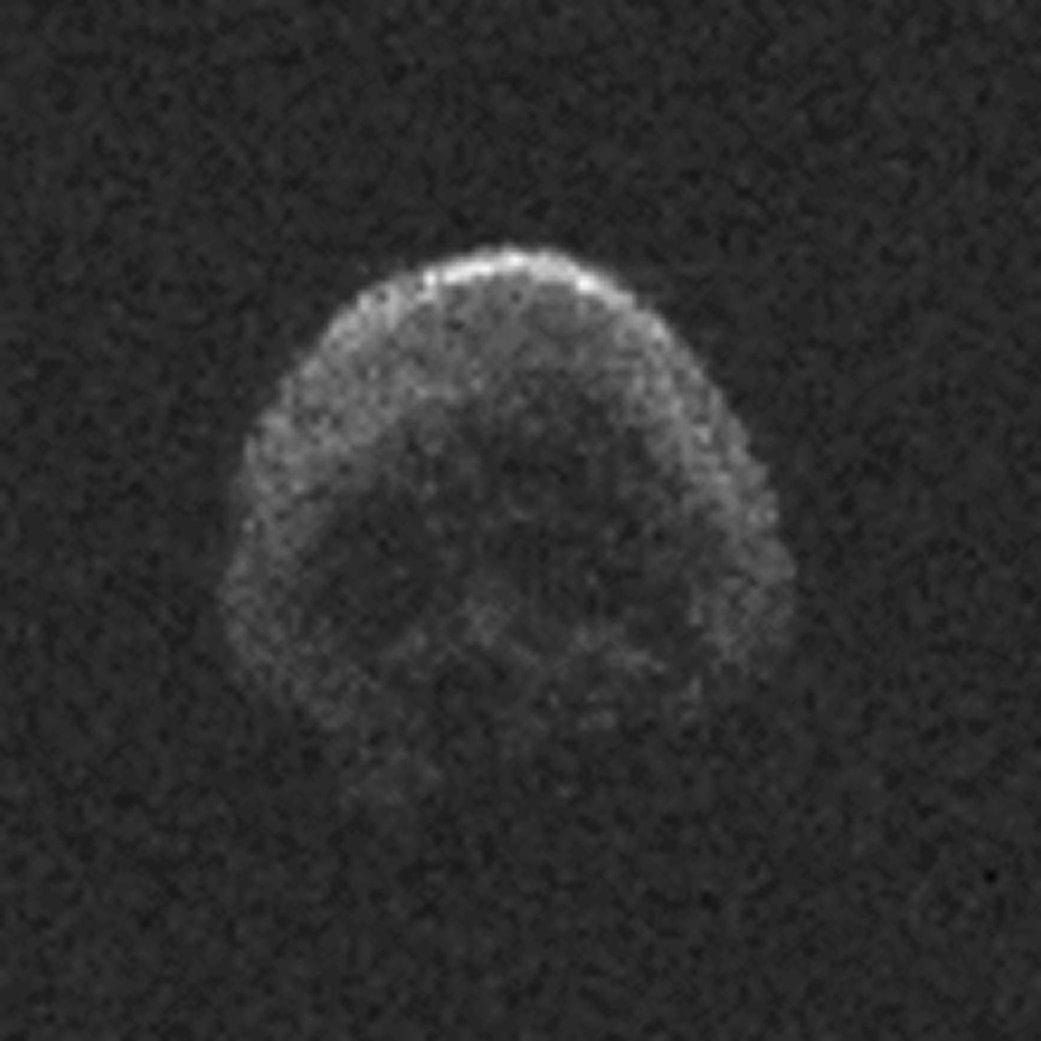
During the last fortnight, I had a wonderful interview with Paolo Martino the project manager for the RAMSES mission. RAMSES stands for Rapid Apophis Mission for Space Safety, and when it comes to backronyms it is not too bad. It's a mission from the European Space Agency (ESA) with the support of the Japan Aerospace Exploration Agency (JAXA). Its target, as the acronym says, is asteroid Apophis.
If you were a nerdy millennial, you might remember the announcement back in 2004, following the discovery of this skyscraper-sized near-Earth asteroid. It had a few percent chance of hitting Earth in 2029. With more observations, it became clear it will miss our planet but come closer to Earth than geostationary orbit. So close that it will be visible as a bright moving dot to the naked eye in parts of Asia, Europe, and Africa on April 13, 2029. Scary but safe, and also an opportunity for scientists to understand the effect that a large gravitational body has on an asteroid. Will it produce quakes? How much will its orbit change? etc. etc. RAMSES will provide those answers and will be the first mission to deliver real-time close-up observations of an object that we can see passing in the sky.
On the cards, RAMSES is what we want for a planetary defense mission. It's being assembled in record time, and it's international. But since the 2024 YR4 asteroid discovery last year, I feel a growing concern. If you don't remember, that asteroid -about 60 meters across - also had a small chance to hit the Earth. Small but serious enough to trigger the international protocols to deal with such a threat and even the preliminary considerations if a deflection mission could be necessary.
The object was a city killer, with enough momentum to level a city but not enough to cause widespread devastation. 2024 YR4 will not hit our planet, but when the chance existed, the affected areas stretched from Central America to Equatorial Africa. This is how we get to the politics of it all. If the dangerous asteroid were small, would Western countries just altruistically launch a mission to deflect it? Would China or India instead be the country that steps up?
I do not want to believe that things are as bad "Don't Look Up" made it look. When it comes to the climate crisis, the economic interests are rich and influential enough that it has been easy to buy media and politicians. For an object that were to destroy our civilization, I am optimistic we would fight it. In the case of a smaller object, affecting a less affluent or less influential country, I am very concerned that we wouldn't. I can hear already politicians complaining about how we should instead spend that money on our own (no, not on welfare but on tax breaks for the rich) and that the people affected by the asteroid can simply move (no, not here of course). How many politicians will claim that it is a hoax? That it will simply burn up in the atmosphere?
NASA's DART mission shows that we can deflect asteroids away (and possibly create the first artificial meteor shower). Planetary defense is possible. Like the myriad of possible approaches to deal with the climate crisis, current and future pandemics, inequalities, and more. Action is what's missing.
 Wilton Square
Click Here To Pre-Order My Book!