
We Shouldn't Run To Mars - A Lesson In Patience From 3 Spacecraft
A big week in space got me thinking about the importance of patience!
In the space of a week, we are seeing three spacecraft milestones. Voyager 1, our beloved, the most distant human-made object, crossed the 1 light-day threshold 49 years after launch. From now on, it would take more than 48 hours to have a conversation with it.
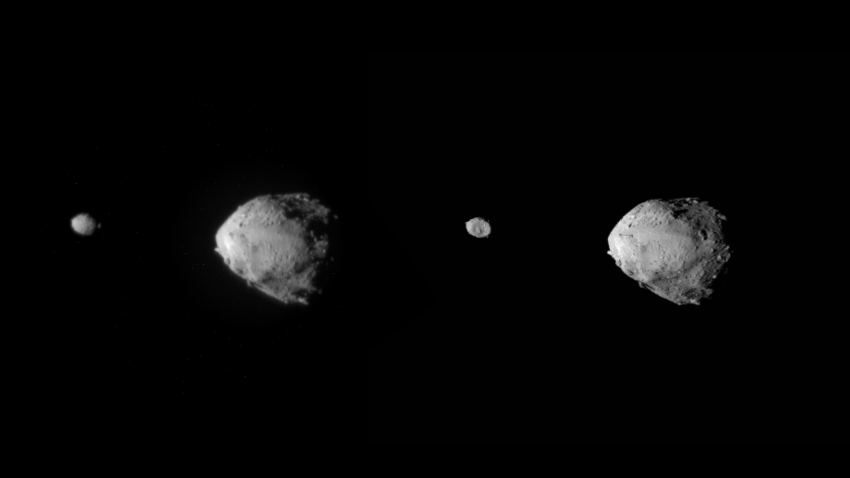
Then we have BepiColombo, another one of my favourite missions, finally reaching Mercury after its 8-year journey. Last but not least, Hera gets to Didymos and Dimorphos on Wednesday after two years in space. I will explain their importance below, but before that, allow me to reflect on something.
Different timelines, locations, and targets, but a single truth I've been reflecting on: space exploration takes so much time.
We often used the maxim 'space is hard'. It is pulled out of drawers and dusted off whenever a rocket explodes, a spacecraft misses its rendezvous, or a lander slams into the solid surface instead of gently touching down. It's an implied exhortation to persevere. Yes, space is hard, but that won't stop us. Space is hard is a truth universally acknowledged.
'Space exploration takes time' should be another obvious saying that we should repeat ad nauseam to make it truly sink in so that the expectations of what is possible match reality.
The problem is not robotic missions. The issue there is that we never have enough, and we should have global collaborations to constantly have orbiters around each planet.
The issue is human exploration of space. I want to see a Moon landing; I wish I was going to the Moon! I want to see humans on Mars! But all the announcements are a desperate rush. We needed to have a lunar base yesterday and a city on Mars last month.
Space exploration takes time. It takes time because space is hard, and if you rush, you fuck it up, and you do not often get second chances. Taking time is seen mostly as a negative in our society. Maybe we should see it as value-neutral or even an opportunity to get things right and make space a bit easier.
Voyager 1 at 1 light-day
It has been everywhere, but if you somehow missed it, Voyager 1 is now 25.9 billion kilometres from Earth. That's about the distance it takes light to travel over 24 hours. 1 light-day is both tiny in cosmic terms and incredible in human terms: this is the first human-made object to get this far!
Mercury science here we come!
BepiColombo is finally at Mercury after 8 years, a whopping 9 planetary flybys, which included a daring manoeuvre to balance out a problem with thrusters.
It brought two spacecraft there, one from ESA (European Space Agency) and the other from JAXA (Japanese Aerospace Exploration Agency), and it will study the smallest planet in the solar system like never before.
Seeing the space rocks humanity moved up close!
Four years ago, NASA's DART smashed into asteroid Dimorphos, the moon of asteroid Didymos. This was the first demonstration of a kinetic impactor, a way to deflect an asteroid.
It was extremely successful shifting not only Dimorphos' orbit around Didymos but also the pair's orbit around the Sun.
There are many questions we do not have an answer to from this event. Thanks to ESA's Hera, which is finally at Didymos, will get them though.
Next stop and final (for now) stop on the Book Tour!


December 12 - Adults only
 Wilton Square
Invisible Rainbows is now out worldwide!